1. Why Mechanical Spring-Detent & Ratchet EDC Hardware Commands Premium Retail Margins
While magnetic sliders dominate entry-level and mid-tier wholesale volume (covered in our N35 vs. N52 Neodymium Magnet Haptic Guide), a rapidly growing segment of adult EDC collectors, industrial designers, and corporate tech buyers specifically seek pure mechanical linkage hardware—or hybrid mechanical-magnetic multi-tools that replicate the crisp, physical engagement of a luxury dive-watch bezel, a precision torque wrench, or a rifle bolt-action breech.
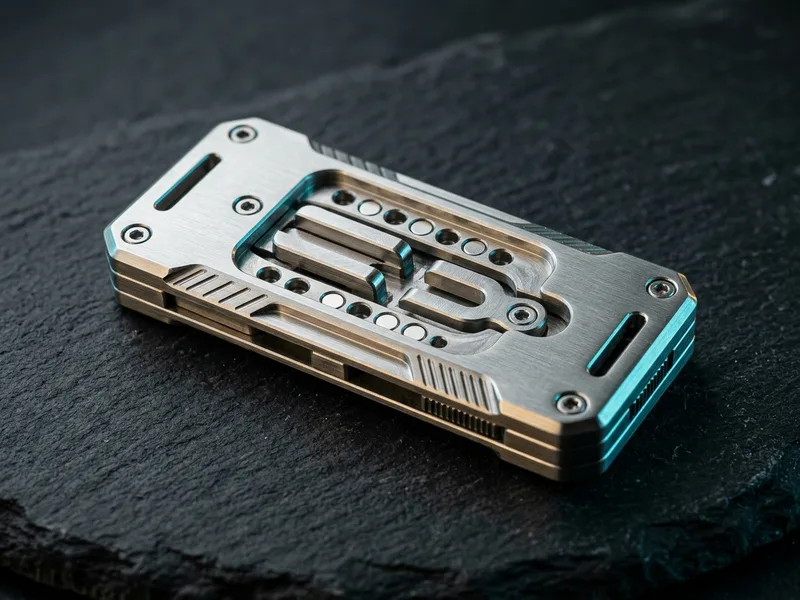
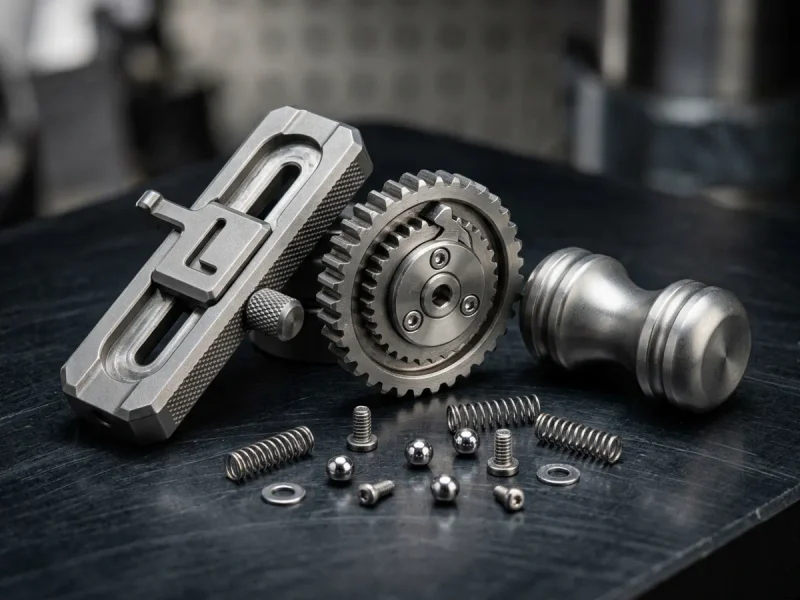
Across our Multi-Action Mechanical EDC Fidgets collection (27+ production molds), tactile feedback is generated not just by magnetic flux fields, but by 304 stainless steel compression springs, hardened pawl teeth, zirconia ($\text{ZrO}_2$) or silicon nitride ($\text{Si}_3\text{N}_4$) detent balls, and planetary gear trains.
Here is why mechanical EDC fidgets achieve 35% to 60% higher retail perceived value:
- Directional Asymmetry & Mechanical Lockup: Unlike a magnetic slider whose attraction curve is symmetrical in both directions, a sawtooth ratchet gear or J-slot bolt breech delivers a distinct mechanical ramp-up followed by an instantaneous, irreversible drop into the next tooth valley.
- Zero External Magnetic Field Options: For aerospace engineers, mechanical watch collectors, and medical laboratory staff who prefer non-magnetic or shielded pocket hardware, pure spring-and-ball mechanical models eliminate stray magnetic fields entirely (and bypass standalone magnet flux indexing under US CPSC 16 CFR Part 1262 Compliance).
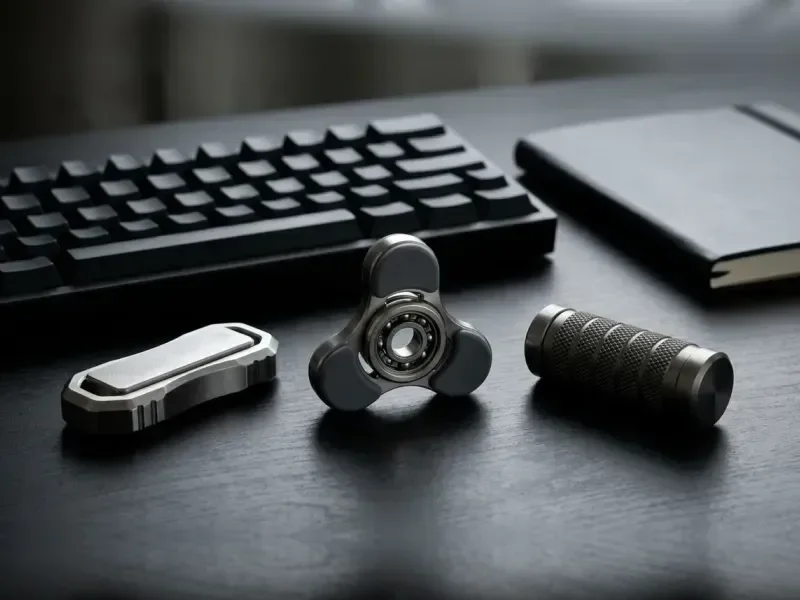
- Multi-Modal 3-in-1 & 4-in-1 Ergonomics: Single chassis designs combine linear ratcheting, rotary clicking, bolt-action snapping, and R188 gyro spinning in one compact pocket instrument.
2. The 4 Core Mechanical Detent Architectures Across Our Factory Catalog
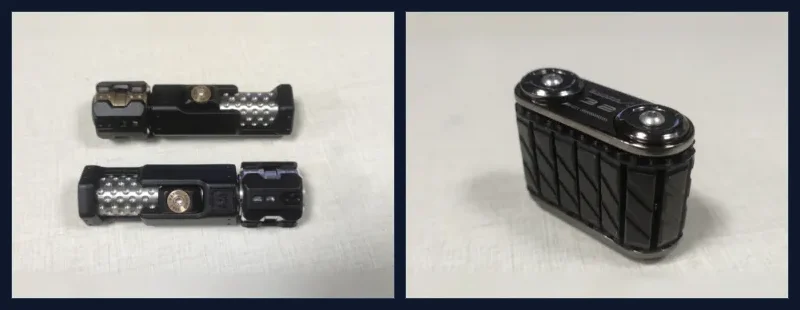
To help sourcing teams select the exact tactile profile for their target demographic, we classify our mechanical EDC molds into four primary kinematic mechanisms:
| Kinematic Mechanism | Internal Actuation Components | Tactile Force & Cadence | Acoustic Signature (at 30cm) | Representative Production SKUs |
|---|---|---|---|---|
| Spring-Loaded Ball Detent (Linear & Rotary) | 304SS helical compression springs + Ø2.5mm–Ø3.0mm $\text{ZrO}_2$/$\text{Si}_3\text{N}_4$ ceramic or steel balls riding in CNC dimple tracks | 3.2 N – 5.8 N per detent; rapid staccato machine-gun cadence | 60 – 68 dBA (Sharp, metallic clockwork tick) | FS-085, FS-092, FS-117, FS-127, FS-130 |
| Bolt-Action & Breech-Lock Recoil | Machined J-slot or L-slot guide channel + heavy recoil main spring + thumb stud plunger | 6.5 N – 11.0 N compression; authoritative single-stroke snap return | 66 – 74 dBA (Heavy metallic chamber-lock clack) | FS-067, FS-098 |
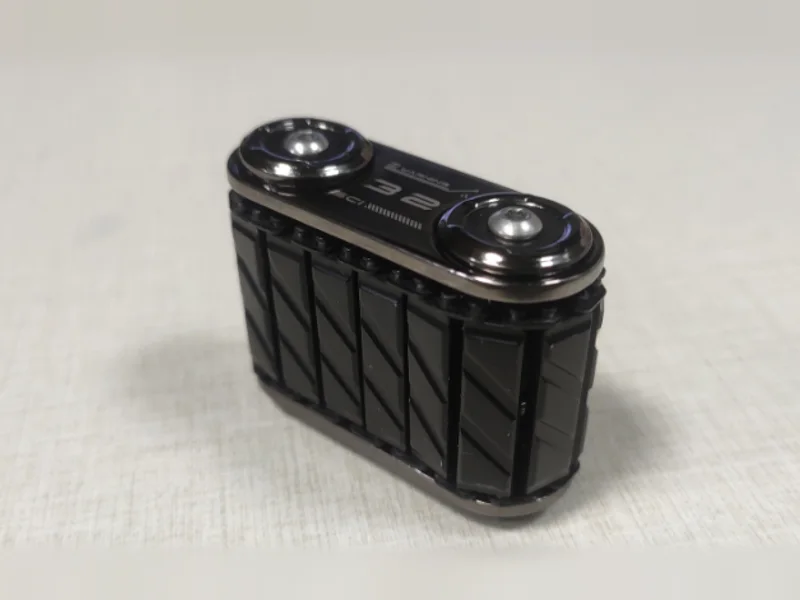
| Planetary Gear, Track & Chain Linkages | Meshed involute spur gears, articulated tank-tread links, or synchronized dual-bearing sprockets | Continuous rolling resistance with geared torque multiplication | 48 – 58 dBA (Rhythmic mechanical gear purr) | FS-068, FS-087, FS-146 |
| Centrifugal Flick & Chaotic Pendulum | Offset counterweight arms, gravity-driven linkages, and hybrid N52 magnetic latch detents | Wrist-flick inertia deployment + crisp magnetic/mechanical lock | 55 – 65 dBA (Crisp deployment snap + free swing) | FS-089, FS-090 |
Deep Dive: Why We Use Ceramic Detent Balls Over Plain Carbon Steel Balls
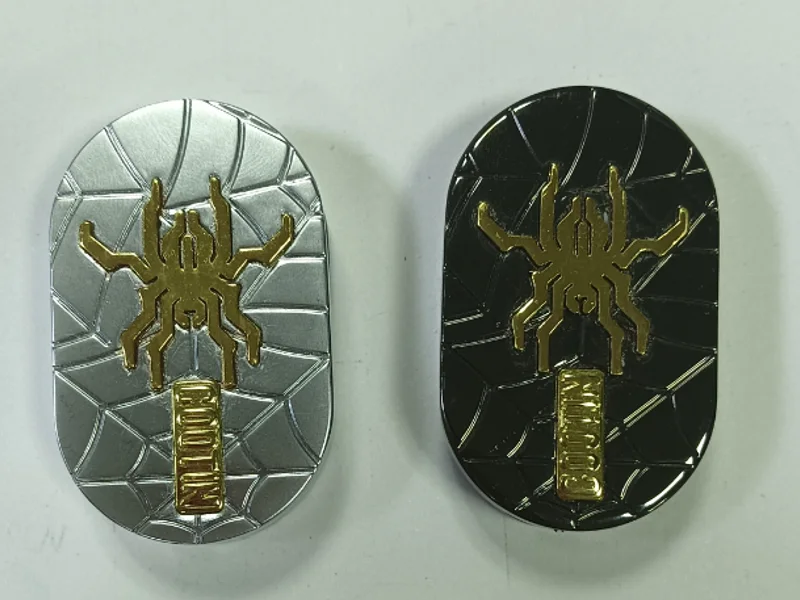
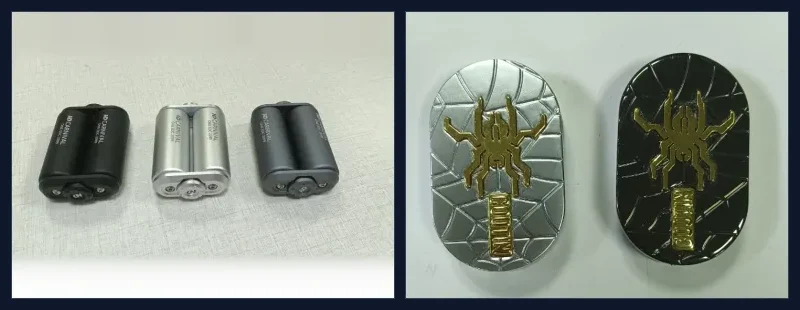
In linear and rotary spring-detent sliders—such as FS-117 (Arachnid 8-Spring Mechanical Slider) and FS-130 (CNC Stainless 12-Bead Spring Bearing EDC)—a tiny sphere is pressed under continuous spring preload against a machined metal detent track. If a factory uses cheap carbon steel balls against an aluminum or stainless track, adhesive micro-welding (galling) scores the track within 5,000 cycles, turning a smooth click into a gritty scrape.
By upgrading the detent spheres to Vickers 1,400–1,600 HV Zirconia ($\text{ZrO}_2$) or Silicon Nitride ($\text{Si}_3\text{N}_4$) ceramic beads—or pairing hardened GCr15 bearing steel balls with self-lubricating virgin PTFE (Teflon) guide blocks as in FS-127 (Bionic Bunny PTFE Spring Mechanical Slider)—friction coefficient drops below $\mu = 0.08$, guaranteeing 100,000+ cycles without track galling.
3. Spring Metallurgy & Modular Tunability: 304 Stainless vs. Piano Wire
The heart of every mechanical ratchet or bolt-action fidget is its helical compression spring. In cheap consumer toys, low-carbon steel springs suffer from stress relaxation (spring set)—losing up to 25% of their free length after a week of heavy clicking, which leaves the slider rattling loosely.
Every mechanical SKU in our CNC Stainless & Exotic Metals collection and Mechanical EDC collection is built around cold-drawn SUS304 stainless steel or SWP-B music wire springs that undergo factory shot-peening and heat-stabilization:
- Wire Diameter & Spring Rate ($k$): Our standard detent springs use
Ø0.35mm to Ø0.50mmwire wound to aØ2.8mmouter diameter with 6 to 8 active coils, delivering a consistent spring rate of1.8 N/mm to 3.4 N/mm. - User-Customizable Spring & Bead Counts: Models like FS-117 (Arachnid 8-Spring Mechanical Slider) and FS-085 (CNC Aluminum Dual-Spring Ratchet EDC) are engineered with removable M1.6/M2.0 Torx or hex screws. End-users can populate 2, 4, 6, or all 8 spring-and-bead chambers to dial in their exact preferred actuation force and acoustic volume—a huge selling point for enthusiast communities!
- Spare Parts Hardware Pack Included: Because tiny
3mmsprings and detent beads can jump across a room if a customer disassembles the slider on an uncarpeted desk, our factory automatically includes a heat-sealed spare spring & ceramic bead maintenance pack inside the retail box of every serviceable mechanical SKU.
4. Acoustic Tuning: Quiet PTFE-Damped Sliders vs. Crisp Metallic Ratchets
Not every customer wants the same decibel output. When building a balanced 3-SKU or 5-SKU retail product line, we recommend pairing high-decibel tactile ratchets with office-friendly PTFE-buffered sliders:
| Use-Case Environment | Target Acoustic Range | Recommended Mechanical Architecture | Top-Converting Wholesale SKUs |
|---|---|---|---|
| Executive Office & Video Calls | 45 – 56 dBA (Low-pitched, damped click) | PTFE-buffered spring sliders, anodized 6063 aluminum bodies, or continuous planetary gear chains | FS-127, FS-092, FS-068 |
| Everyday Pocket Carry (EDC) | 58 – 66 dBA (Crisp dive-watch bezel ratchet) | Dual-spring ceramic bead ratchets & hybrid bearing-ratchet spinners | FS-085, FS-087, FS-130 |
| Enthusiast Collector & Gaming Desk | 66 – 74 dBA (Authoritative metallic chamber lock) | Heavy bolt-action spring breeches, 8-spring arachnid arrays & centrifugal flick sliders | FS-067, FS-089, FS-098, FS-117 |
If your audience specifically craves prolonged musical ringing (2,800–4,200 Hz sustained acoustic decay) rather than crisp mechanical clicks, pair these mechanical models with our Acoustic Tuning Fork Fidgets collection and review our Acoustic Tuning Fork Slider Engineering Guide.
5. Metallurgy & Surface Wear Resistance on Moving Mechanical Linkages
Because mechanical EDC fidgets involve sliding metal-on-metal or ceramic-on-metal contact surfaces, choosing the right base alloy and surface treatment is critical:
- CNC 303/304/316 Stainless Steel (FS-117, FS-127, FS-130, FS-146): Offers
180–220 HVcore hardness that work-hardens slightly along the detent track, developing a mirror-burnished raceway that actually gets smoother over the first 1,000 clicks. - Hard-Anodized 6063-T6 Aerospace Aluminum (FS-085, FS-092): Keeps pocket carry weight down to a featherlight
38g–58gwhile using an anodic oxide ceramic surface layer (25+ microns) to resist wear.Compare full machining cost breakdowns in our Zinc Alloy Die-Casting vs. CNC Stainless Steel Cost Guide.
6. Custom Branding & 100-Piece Private-Label Execution for Mechanical EDC
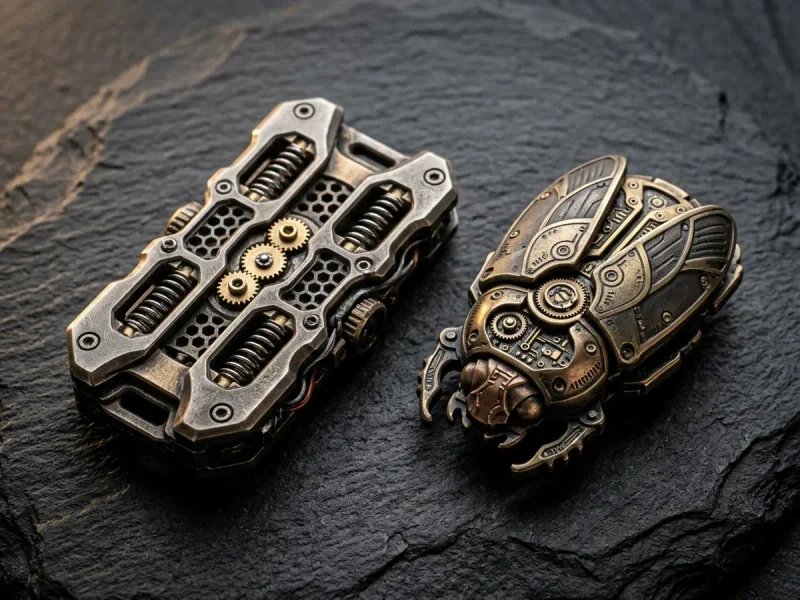
Multi-action mechanical fidgets often feature exposed screws, skeletal cutouts, or articulated beetle/mecha armor plates (FS-098). Where do we place your custom brand mark?
- Recessed Cheek Plates & Spine Flats: On bolt-action (FS-067) and dual-spring ratchet sliders (FS-085), we fiber-laser engrave your logo onto the side receiver plate or pocket-clip flat (see Laser Engraving vs. UV Printing Logo Specs).
- Custom Presentation Packaging: Pair any mechanical SKU at a 100-piece MOQ with a custom-branded EVA zipper case or windowed tin box including your spare spring/bead kit—see our Custom Packaging Engineering Guide and Zero-Tooling Private-Label SOP.
Build Your Custom Mechanical & Ratchet EDC Assortment
Ready to test our bolt-action breeches, 8-spring arachnid sliders, and planetary gear chains? Contact our factory engineering desk for a curated Mechanical EDC Sample Pack and tiered wholesale pricing starting at 50–100 units.
Request Mechanical EDC Quote & Samples →