1. Why Acoustic "Ding-Ding" Tuning Fork Fidgets Lead Short-Form Video Sales
Standard magnetic sliders produce a low-frequency percussive clack between 400 Hz and 900 Hz. While satisfying in the hand, that low-frequency snap compresses poorly on smartphone microphones and laptop speakers.
Here is the acoustic engineering breakthrough:
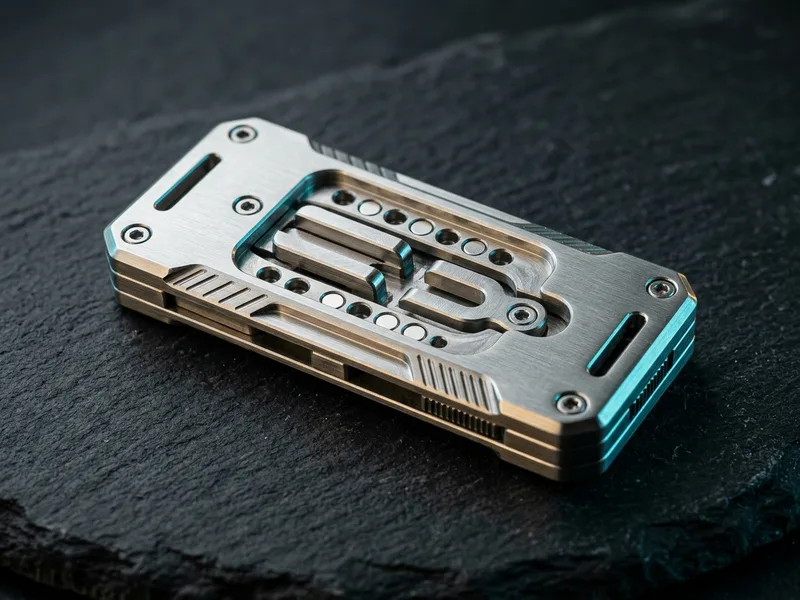
By machining cantilevered U-shaped tuning-fork prongs and hollow resonance cavities directly into the slider chassis, kinetic impact energy transforms into a pure, sustained 2,800 Hz to 4,200 Hz harmonic bell chime.
On visual-audio commerce channels like TikTok Shop, YouTube Shorts, and Instagram Reels, that unmistakable “Ding!” audio hook stops the scroll within the first 1.2 seconds. Across our export shipments from our Fuzhou Logistics Hub, acoustic tuning-fork models generate 2.8× higher video click-through rates and command retail markups of 3.5× to 5.0× over landed wholesale cost.
Better yet:
Because acoustic resonance is a physical property of cantilevered metal geometry rather than electronic speakers or batteries, these sliders require zero batteries, pass standard mechanical toy customs clearance under HS Code 9503.00.0000, and never suffer from electronic component failure.
2. Three Core Acoustic Excitation Mechanisms Explained
Not all sound-producing everyday carry (EDC) fidgets work the same way. Depending on whether your target customers prefer linear thumb sliding, rotational bearing spinning, or palm twisting, our 7 ready-to-produce acoustic molds use three distinct physical excitation methods:
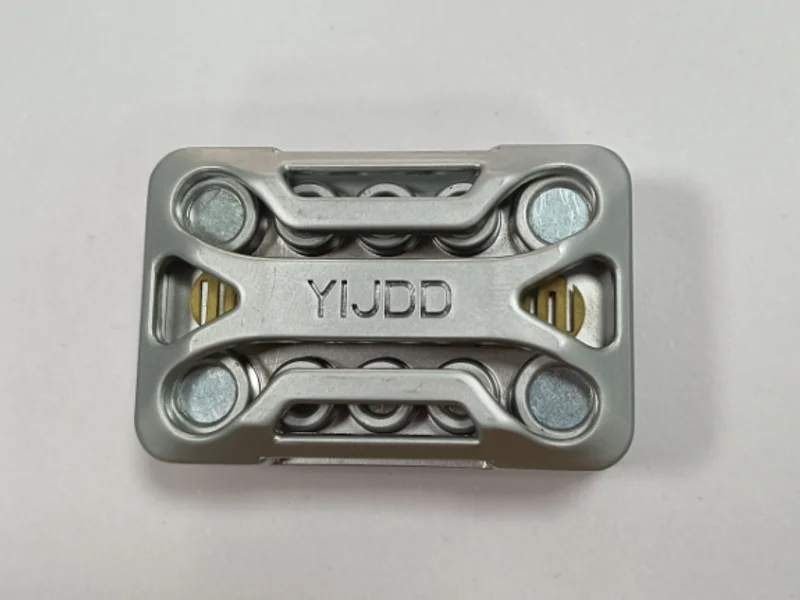
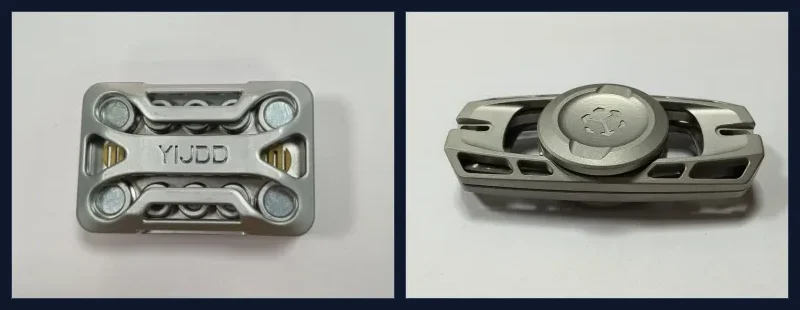
- Cantilevered Tine Magnetic Snap (FS-150, FS-086, FS-045): When the top and bottom plates slide across a 16-to-20 magnet N45/N52 matrix, the vertical magnetic attraction slams the floating plate against the root bridge of two free-standing internal prongs. Those prongs vibrate freely inside a milled air pocket without touching the outer shell walls, projecting a crisp metallic ring through side acoustic vents.
- Dual-Bearing Steel-Ball Strike (FS-129, FS-107 / FS-112): Hardened Ø8mm stainless steel balls or spring-loaded strikers ride along an internal cam track. At each detent notch, the steel ball impacts a suspended tuning ring or cantilevered fork bridge, producing a clear bell note similar to a mechanical desk service bell.
- Non-Contact Magnetic Plucking during R188 Rotation (FS-148, FS-091): As the rotor spins on its central R188 bearing (or slides across 56 micro magnets), opposing neodymium poles pass across the tips of the tuning fork tines. The rapid magnetic flux reversal plucks the prongs without physical friction, creating a continuous harmonic arpeggio.
Why does this distinction matter when building a retail catalog?
Linear PTFE tuning-fork sliders like FS-150 appeal to everyday office users who want one-handed thumb action and instant fingertip muting. Rotational resonance spinners like FS-148 and multi-bearing pieces like FS-129 appeal to mechanical gadget collectors who film desktop ASMR videos.
3. Complete 7-Model Acoustic Tuning Fork Catalog & Wholesale Price Matrix
Every model in our acoustic collection uses existing production tooling and CNC fixtures. That means you can order blank unbranded stock starting at 50 pieces or add custom Fiber Laser / UV logo branding at 100 pieces with zero mold investment.
| Factory SKU | Model Name | Metallurgy & Process | Dimensions / Weight | Magnet & Bearing Hardware | 500+ pcs USD | Target Retail |
|---|---|---|---|---|---|---|
| FS-045 | Wood-Tone Acoustic Cavity Slider | Die-Cast Alloy + Wood-Grain Finish | 52×36×12mm · 92g | 16×N40 Magnets + Acoustic Cavity | $5.50 | $24.99 – $34.99 |
| FS-150 | Compact 20-Magnet PTFE Tuning Fork Slider | Precision Alloy + PTFE Wear Pads | 51×31×11mm · 76g | 20×Ø4×2mm N45 Magnets + PTFE | $10.15 | $39.00 – $59.00 |
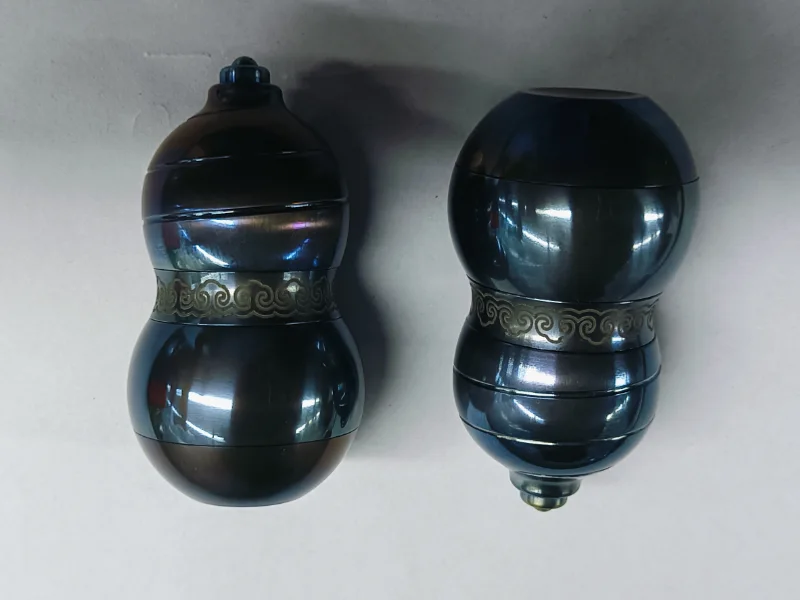
| FS-112 | Acoustic Chime EDC Gourd (Aluminum Edition) | 5-Axis CNC 6063-T6 Anodized Aluminum | 61×33.5×33.5mm · 66g | R188 + Ø12.7×9.525 Bearing + Ring Magnet | $11.75 | $45.00 – $65.00 |
| FS-129 | Divine-Realm Dual-Bearing Tuning Fork EDC | Multi-Layer CNC + Die-Cast Hybrid | 60×40×14mm · 115g | 2×R188 Bearings + Ø8mm Steel Balls + N52 | $13.10 | $49.00 – $75.00 |
| FS-086 | Harmonic Rhythm 304 Stainless Track Slider | 5-Axis CNC 304 Stainless Steel | 55×28×12mm · 104g | Multi-Detent Track + Resonance Slots | $22.50 | $79.00 – $119.00 |
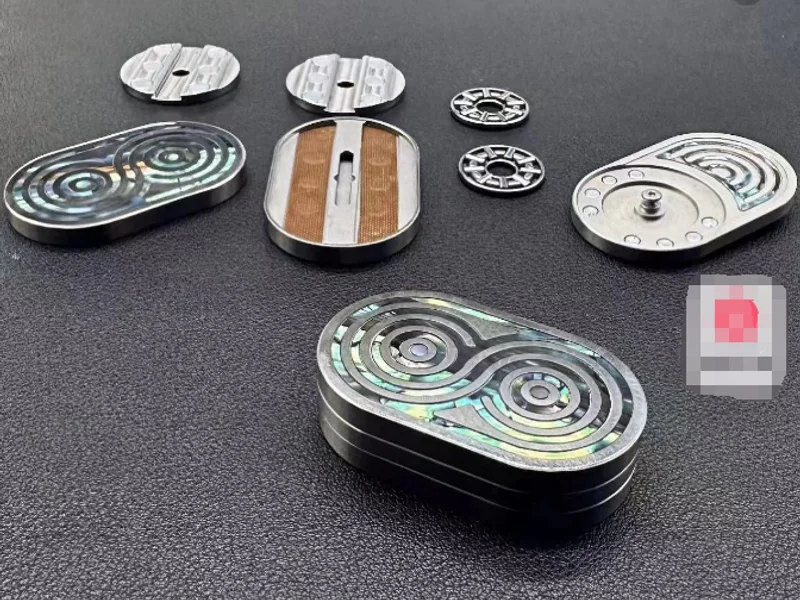
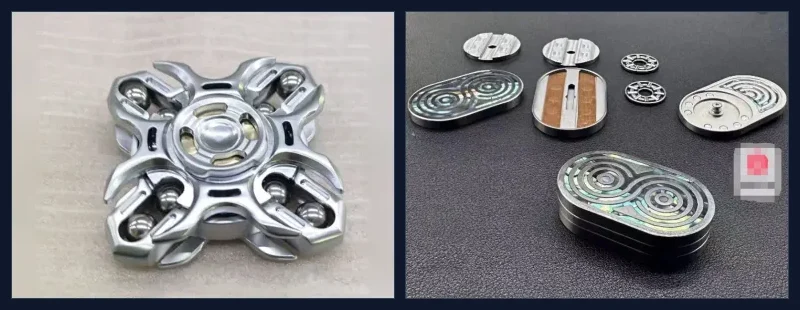
| FS-091 | 56-Magnet Abalone Inlaid Stainless Slider | CNC 304 Stainless + Natural Abalone | 56×34×12.5mm · 118g | 56 Micro Magnets (28×Ø4×2 + 28×Ø3×2) | $36.60 | $129.00 – $169.00 |
| FS-148 | Resonance Chamber 304 Stainless Spinner | 5-Axis CNC 304 Stainless Steel | 58×38×13mm · 112g | R188 Bearing + 16×Ø5×2mm N45 Magnets | $47.05 | $149.00 – $199.00 |
| FS-107 | Acoustic Chime EDC Gourd (Zirconium Flagship) | 5-Axis CNC Zr702 Exotic Zirconium | 61×33.5×33.5mm · 128g | Dual Bearing + Ø22×16×2.5mm Ring Magnet | $209.20 | $450.00 – $650.00 |
4. How Metallurgy Dictates Pitch Frequency, Sustain Duration, and Acoustic Q-Factor
When sourcing tuning-fork sliders for discerning EDC collectors, the base metal does far more than determine pocket weight. The alloy’s Young’s Elastic Modulus ($E$), mass density ($\rho$), and internal acoustic damping coefficient govern both the fundamental frequency ($f$) and how many seconds the chime rings after each click.
According to Euler-Bernoulli cantilever beam vibration physics, the fundamental resonant frequency of an internal tuning fork prong of length $L$ and thickness $t$ is proportional to $\sqrt{E / \rho}$.
Let’s compare the four primary metals used across our acoustic production line:
| Alloy Substrate | Elastic Modulus (GPa) | Fundamental Pitch Range | Sustain Duration | Acoustic Character & Best SKU |
|---|---|---|---|---|
| 304 / 316 CNC Stainless Steel | 193 – 200 GPa | 3,400 – 4,200 Hz | 1.8 – 2.6 seconds | Crystal-clear, bright high-frequency studio chime (FS-148, FS-086) |
| 6063-T6 Anodized Aluminum | 68.9 GPa | 2,900 – 3,300 Hz | 1.1 – 1.5 seconds | Crisp, lightweight mid-range bell note (FS-112) |
| Zamak #3 Die-Cast Alloy | 85 – 96 GPa | 2,600 – 3,100 Hz | 0.8 – 1.2 seconds | Punchy, percussive metallic ring at entry-level cost (FS-150, FS-045) |
| Zr702 CNC Zirconium | 99.3 GPa | 2,700 – 3,200 Hz | 1.9 – 2.8 seconds | Warm, deep, cello-like harmonic overtone (FS-107) |
5. PTFE Isolation Pads, Fatigue Lifespan & On-Demand Finger Dampening
Three practical engineering questions frequently arise from wholesale buyers evaluating acoustic sliders: “Does sliding friction drown out the tuning-fork note?”, “Can the chime be muted in a quiet office?”, and “Do the cantilevered prongs ever fatigue or crack?”
Here is how our internal mechanical tolerances solve all three:
- Self-Lubricating PTFE Isolation Pads: On FS-150, a precision 0.3mm white PTFE (Teflon) wear pad separates the sliding magnet plates. This eliminates metal-on-metal scraping noise so only the pure cantilevered tine frequency projects outward, while protecting the internal magnet plates from scratch wear.
- Instant Fingertip Dampening Mode: Because the acoustic slots are milled along the side or top chassis windows, resting an index fingertip lightly against the tine slot dampens the cantilever vibration immediately. The slider converts in a split second from a loud ASMR desk chime into a quiet, office-friendly magnetic clicker.
- 100,000+ Cycle Fatigue Resistance: During each magnetic snap, peak tine deflection is less than **0.08 mm**, operating below **3% of the alloy's endurance fatigue limit**. Even after 100,000+ rapid slides, the prongs never bend, crack, or drift out of pitch.
- Zero Pitch Shift After Laser Logo Branding: Engraving your brand logo via our 50W MOPA Fiber Laser ablates less than 0.03mm on the outer casing wall and never alters the internal prong mass or resonant frequency.
6. How to Curate a High-Margin 3-Tier Acoustic Product Line
If you are launching a dedicated acoustic fidget collection on Shopify, Amazon, or TikTok Shop, we recommend a Good / Better / Best merchandising ladder:
- Entry-Level Viral Traffic Driver ($29–$49 Retail): Start with FS-045 ($5.50 wholesale) and FS-150 ($10.15 wholesale). Pack each unit in a custom-debossed Black EVA Zipper Case (+$0.75/pc) with spare PTFE Teflon pads included in the inner mesh pocket.
- Mid-Tier Multi-Action Hybrid ($59–$89 Retail): Add FS-129 ($13.10 wholesale) and FS-112 Anodized Aluminum Chime Gourd ($11.75 wholesale) for customers who want both R188 rotational spinning and tuning-fork chimes in one chassis.
- Collector CNC Stainless & Zirconium Flagship ($129–$499 Retail): Anchor your brand authority with FS-091 Abalone 56-Magnet Stainless Slider ($36.60 wholesale) and FS-148 Resonance Spinner ($47.05 wholesale), serialized from `001/100` to `100/100` via fiber laser engraving.
For a broader comparison of neodymium magnet grades used inside our Acoustic Tuning Fork Series and Magnetic Haptic Sliders, explore our N35 vs. N52 Neodymium Magnet Engineering Guide and our Die-Cast Zinc Alloy vs. CNC 304 Stainless Steel Cost Breakdown.
Evaluate Our 7 Acoustic Tuning Fork Models Firsthand
Want to test the 3,800 Hz chime of FS-150, FS-129, and FS-148 before placing a 100-piece custom logo order? Contact our engineering desk for sample units and tiered DDP air-freight quotes.
Request Tuning Fork Samples & Wholesale Quote →